

Powdered vs Powder-Free Gloves: Which One Does Your Business Actually Need?
2026-06-17 14:31:03
Disposable gloves come in two variants: powdered gloves and powder-free gloves. The difference is a thin layer of lubricant powder (usually cornstarch) on the inside — and it matters more than you might think.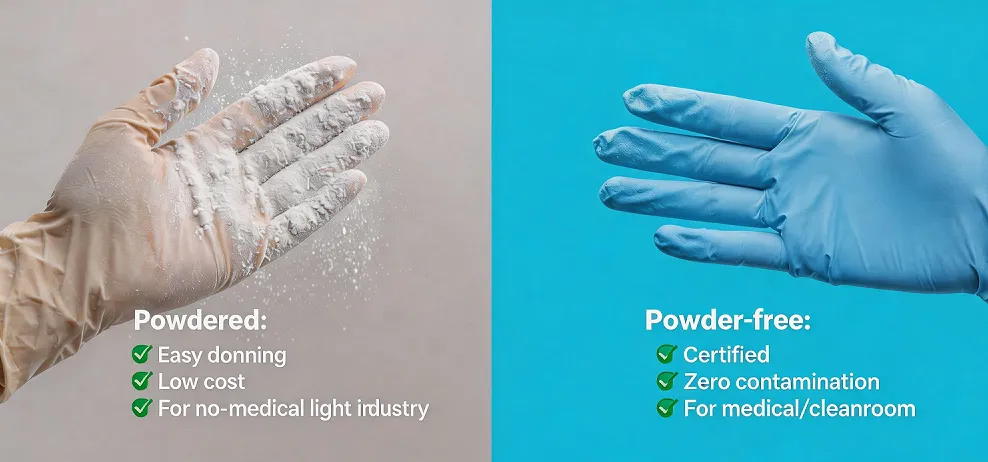
1.Powdered Gloves
A coating of cornstarch or modified starch makes them easier to put on and remove.
Pros: Easier donning, cost-effective, moisture absorption.
Best for: Low-risk exams, light industrial work, basic food handling.
2.Powder-Free Gloves
Manufactured through chlorination or polymer coating for easy donning — no powder involved.
Pros: Zero dust contamination, lower allergy risk, compliant with medical regulations (FDA banned powdered gloves in 2016).
Suitable for: Cleanrooms and surgical settings.
3.Quick Comparison
Factor | Powdered | Powder-Free |
Donning Ease | Easier | Good (modern coating) |
Dust Contamination | Yes | None |
FDA Medical OK | ❌Banned (2016) | ✅Standard |
Allergy Risk | Higher (powder carriers) | Minimal |
Cost | Lower | Slightly higher |
Best For | Non-medical, low-risk | Medical, labs, cleanrooms |
4.Bottom Line
Medical and food handling: powder-free (compliance required).
Non-medical light industry: powdered can work as a low-cost option.
Hebei Boran Medical Technology Co., Ltd.Offers FDA/CE/ISO certified powder-free nitrile gloves for medical exams, surgery, and cleanroom environments.